Fifa world cup 2010
Fifa world cup 2010
Fifa world cup 2010
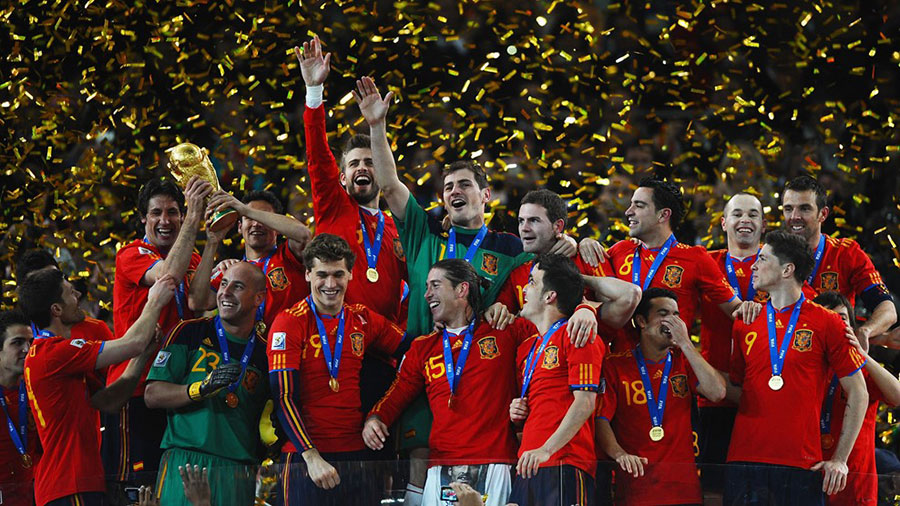
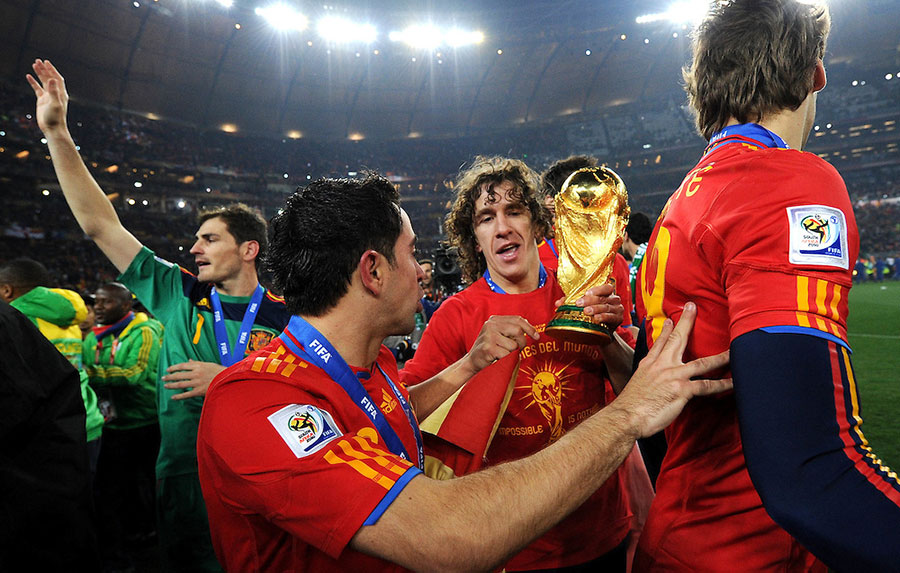
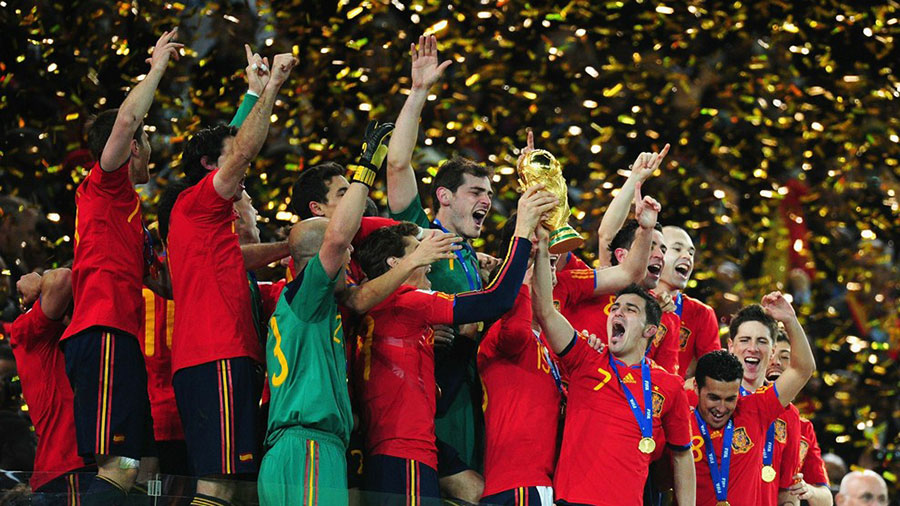
В ЮАР испанцы, ставшие лучшей командой Евро-2008, прибыли с серьёзными намерениями и лозунгом «Надежда — мой путь, победа — моя судьба». Своей игрой они доказали, что имеют право называться не просто чемпионами мира, а лучшей командой планеты.
За семь матчей на турнире испанцы оступились лишь один раз, проиграв в стартовой встрече группового этапа швейцарцам. После подопечные Винсенте дель Боске очков не теряли. По ходу чемпионата «красная фурия» оставила не у дел Чили, Гондурас, Португалию, Парагвай и Германию, а в финальной игре вырвала победу у Нидерландов.
Решающий матч оставил зрителей без обилия голов — обе команды продемонстрировали рациональный футбол и продержали нули на табло вплоть до 116-й минуты, когда полузащитник испанцев Андреас Иньеста забил победный мяч.
Герой
Лучшим игроком ЧМ-2010 журналисты и болельщики признали лидера сборной Уругвая Диего Форлана. В матчах за свою команду он забил пять мячей, в том числе один в проигранном поединке со сборной Германии за третье место. Во многом благодаря лидерским качествам нападающего сборная Уругвая, до начала ЧМ не входящая в число фаворитов турнира, не только вышла из группы, но и остановилась всего в шаге от финала.
Получив «Золотой мяч», Форлан стал четвёртым представителем Латинской Америки, выигравшим престижную награду, которая вручается с 1982 года. В 1986-м она досталась Диего Марадоне, в 1994-м — Ромарио, а в 1998-м — Роналдо. Кроме того, уругвайский лидер установил рекорд на самом ЧМ. Он стал единственным, кто забил первый и последний гол своей команды на турнире.
Антигерой
Чемпионат мира в ЮАР сложился неудачно для сборной Португалии и лично для её лидера и капитана Криштиану Роналду. В четырёх матчах он смог отметиться лишь одним голом и одной голевой передачей.
Худшей игрой для звезды «европейских бразильцев» стал решающий матч 1/8 финала, в котором португальцы с минимальным счётом уступили будущим чемпионам — Испании. Роналду вышел в стартовом составе, провёл на поле 90 минут, но так и не сумел отличиться, потому что защита взяла его в плотное кольцо. После игры нападающий не скрывал своего разочарования и отказался общаться с журналистами. Криштиану посоветовал им задать все вопросы о причинах неудачи команды главному тренеру Карлушу Кейрушу.
Европейская пресса увидела в словах Роналду прямое обвинение в адрес наставника, после чего португальцу пришлось извиняться. «Когда я посоветовал спросить о причинах фиаско у тренера, то подразумевал возможность пообщаться с ним на пресс-конференции. Там журналисты могут подробно обо всём расспросить. Сам же я был не в том состоянии, чтобы давать какие-либо комментарии. Никогда не думал, что столь невинное выражение может быть совершенно неверно понято. Так что хотел бы попросить не искать поводы для конфликта там, где их нет», — призвал Роналду. Он также признался, что неудача национальной команды негативно сказалась на его психологическом состоянии. «Я опустошён, полностью опустошён, а также очень разочарован. Ничего приятного я не испытываю и предпочитаю страдать в одиночестве», — поделился эмоциями Криштиану.
Открытие
Сенсационные результаты в ЮАР продемонстрировала сборная Уругвая. Команда, пробившаяся в финальную часть турнира только через стыковые матчи, не просто уверенно дошла до полуфинала, но и стала лучшей неевропейской командой чемпионата. Не потерпев ни одного поражения, обыграв Мексику, ЮАР и сыграв вничью с Францией, южноамериканцы вышли из группы с первого места и расправились в 1/8 финала с Южной Кореей.
С участием уругвайцев прошёл и самый драматичный матч чемпионата, после которого команда Диего Форлана и Луиса Суареса оказалась в шаге от финала. В четвертьфинале подопечные Оскара Табареса оставили за бортом турнира сборную Ганы, для чего им потребовалось и дополнительное время, и серия пенальти. Впрочем, как считают эксперты, исход поединка был предрешён на 120-й минуте.
При счёте 1:1 африканцы провели опасную атаку, и Суаресу, защищающему ворота, пришлось сыграть рукой. Наказание не заставило себя ждать: красная карточка и пенальти. Как выяснилось позже, решение Луиса было верным: Асамоа Гьян с 11-метровой отметки послал мяч в перекладину. «У меня не было выбора. Мы могли проиграть, но нас спасла рука Бога, которая теперь принадлежит мне», — объяснял свой поступок уругваец.
По итогам турнира, оступившись в полуфинале с Голландией и потерпев неудачу в матче за 3-е место с Германией, бело-голубые заняли четвёртую строчку в итоговой табели о рангах.
Разочарование
Чемпионат мира запомнился очередным провалом сборной Италии, которая прибыла на турнир в качестве действующего победителя. На этот раз «скуадра адзурра» не просто не вышла из группы, а установила новый антирекорд страны: впервые национальная команда заняла последнее место в своём квартете. Итальянцы, оказавшиеся в компании с Парагваем, Словакией и Новой Зеландией, не смогли обойти ни одного из соперников, дважды сыграв вничью и уступив словакам в своём последнем матче на турнире.
Крайне неудачно сложился чемпионат и для голкипера итальянцев Джанлуиджи Буффона, который из-за травмы спины отыграл на турнире всего 45 минут. Его сменщик Федерико Маркетти полноценно заменить выбывшего лидера так и не смог.
Бомбардир
На ЧМ-2010 многие звёзды не сумели оправдать ожидания болельщиков. Для Лионеля Месси, Тьерри Анри, Франка Рибери, Уэйна Руни и Кака турнир сложился неудачно. Зато показал себя молодой Томас Мюллер, до начала финальной стадии мундиаля мало знакомый широкой футбольной общественности. Главный тренер сборной Германии Йоахим Лёв не доверял 21-летнему нападающему во время отборочной кампании, но в финальной стадии турнира предоставил молодому форварду шанс и место в стартовом составе. Мюллер надежды оправдал. По итогам ЧМ он с пятью голами и тремя передачами стал лучшим бомбардиром турнира и получил «Золотую бутсу». Томас Мюллер также стал лучшим молодым игроком и набрал наибольшее количество баллов по системе гол + пас.
Момент
Финальная стадия ЧМ-2010 принесла мировую известность осьминогу Паулю из «Центра морской жизни» в немецком Оберхаузене. Свою карьеру моллюск-оракул начал ещё во время Евро-2008. Он успешно предсказывал исход матчей с участием своей национальной команды.
В 2010-м Пауль вышел на мировую арену и продолжил прогнозировать. Так, он безошибочно предсказал результаты всех игр Германии, в том числе победу немцев в 1/4 финала с аргентинцами, после чего бундестим разгромила подопечных Диего Марадоны со счётом 4:0.
Перед полуфиналом Германия — Испания осьминог неожиданно для многих выбрал испанский флаг, и через несколько часов это предсказание морского оракула тоже сбылось.
Болельщики команд, пострадавших от прогнозов осьминога, грозили ему расправой. Сами немцы после осечки в шаге от финала собирались сварить из моллюска суп, а аргентинский повар Николас Бедорроу предложил изысканный рецепт — подать Пауля к столу с картофелем, сладким перцем и оливковым маслом.
Популярность Пауля в дни проведения турнира была настолько высока, что к нему сразу после победы в финальном мачте обратился хавбек сборной Испании Андреас Иньеста. «Я хочу поздравить Пауля! Благодарю его за точные прогнозы. Он навсегда останется звездой в нашей стране. Побольше бы таких осьминогов», — заявил хавбек.
Символическая сборная
Икер Касильяс (Испания) — Майкон (Бразилия), Серхио Рамос, Карлес Пуйоль (оба — Испания), Филипп Лам (Германия) — Уэсли Снейдер (Голландия), Хави (Испания), Бастиан Швайнштайгер (Германия), Андрес Иньеста (Испания) — Диего Форлан (Уругвай), Давид Вилья (Испания).
2010 FIFA World Cup
The 2010 FIFA World Cup was the 19th edition of the FIFA World Cup, the global championship tournament in men’s association football, held across 10 cities in South Africa from 11 June to 11 July 2010.
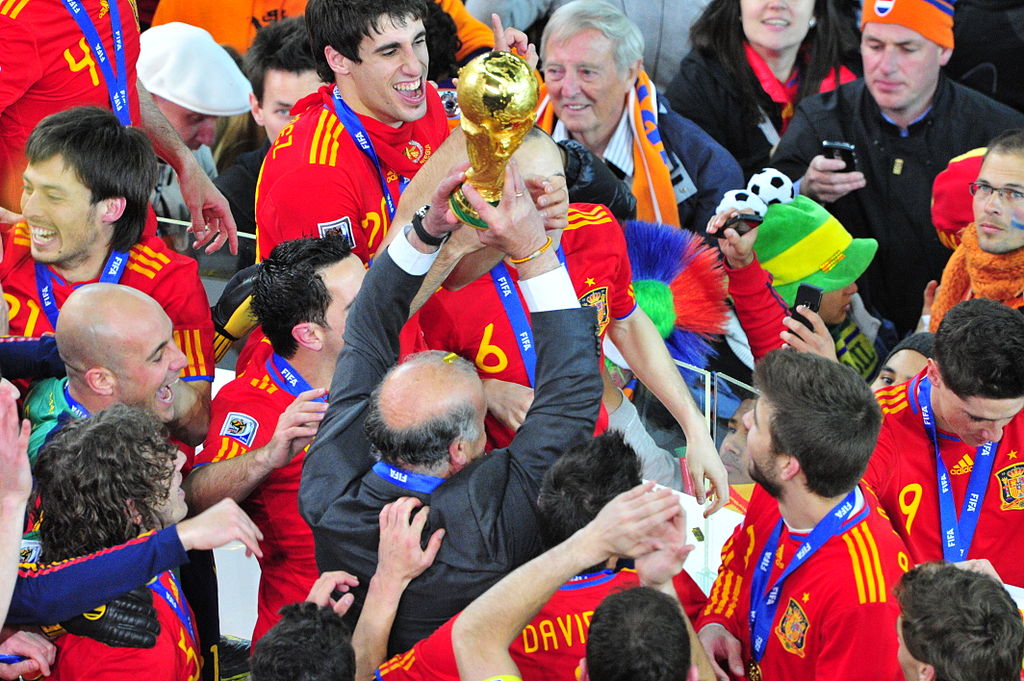
The defending champions were Italy, who won the 2006 tournament in Germany. The tournament was won by Spain, which beat the Netherlands in the Soccer City stadium, Johannesburg, on 11 July 2010.
2002–2006
2006–2010
|
|
|
The official emblem of the 2010 FIFA World Cup was unveiled on 7 July 2006 in Berlin, Germany during the 2006 FIFA World Cup. This is the only men’s FIFA World Cup logo to be enclosed in a rectangle like the FIFA Women’s World Cup (the rectangular logo system was scrapped starting from the 2019 Women’s World Cup).
2010 FIFA World Cup South Africa
2010 FIFA World Cup South Africa
Developer:
Publisher:
Platform(s):
Release date(s):
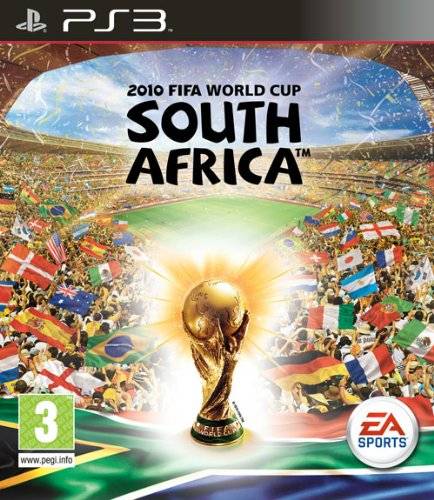
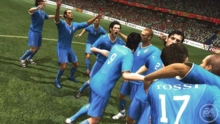
2010 FIFA World Cup South Africa is a FIFA games exclusive for the 2010 FIFA World Cup, published by EA Sports.
Contents
Gameplay
EA has announced that there will be gameplay improvements over FIFA 10, such as a higher rate of player fatigue for matches at higher altitudes, with an advantage to a home team who plays at a higher altitude against an away team who does not. EA has also announced that players can get injured outside of international matches. Players choose a team from the 199 nations available and compete against the computer or against other players through online gaming services PlayStation Network or Xbox Live. All 10 official World Cup stadiums are available for play.
EA has also announced that the «Captain Your Country» mode will return, and that FIFA 10owners can import their Virtual Pro for this purpose, and then earn CYC Accomplishments and attribute boosts. The game’s Penalty kick have been changed in order for their outcome to better reflect the player’s own composure, and the game’s online multiplayer lobby system has been limited to unranked head to head matches. As in 2006 Road to FIFA World Cup a «scenario» mode is included with 55 playable scenarios from past World Cup matches. In addition, scenarios from the 2010 World Cup are playable with an online update.
Teams and venues
The included teams were confirmed by Electronic Arts on 17 February 2010. The game contains 199 of the 204 national teams that took part in the process. Electronic Arts stated that they have included every team that have permitted them to use, with some others not being allowed for «various reasons». The five teams that were in the draw for World Cup qualifying but are not included in the game are African teams. All five withdrew from the qualifying stage before it began. Additionally, the game does not feature who did not participate in World Cup qualifying.
The game includes 2010 FIFA World Cups all 10 venues used at the 2010 FIFA World Cup, as well as stadiums from each qualifying region and a range of «generic» stadiums.
Soundtrack
The 2010 FIFA World Cup soundtrack comprises 28 tracks by artists from 21 countries. According to Electronic Arts it is intended to be a soundtrack that «celebrates the cultural vibrancy of the first FIFA World Cup to be held in Africa». The headline track is «Wavin Flag World Cup Celebration Mix Wavin Flag Coca-Cola Celebration Mix» by K’naan.
Fifa world cup 2010
Уроки 2010FIFA WORLD CUP. Часть I.
Годик М.А., Годик В.А., Власов А.Е.
Чемпионат Мира, как Чемпионат Европы, проводимые раз в четыре года, относятся к такому типу скоротечных, быстротекущих турниров, где мастерство, опыт, настрой, возраст, физические данные и состояние отдельных игроков соединяясь в одно целое, играют решающую роль в достижении (или не достижении) поставленной цели.
Главному тренеру и всему тренерскому штабу приходиться решать очень сложную задачу выбора заявочного состава игроков на турнир и каждую встречу в целом, учитывая множество факторов.
Сжатые сроки турниров (для Чемпионата Европы чуть более трех недель, для Чемпионата Мира почти месяц) только усиливают и обостряют влияние всех факторов и этот момент становится настолько значимым, что малейшая ошибка, стечение обстоятельств могут повлиять на конечный результат и привести к необратимым последствиям. Каждая игра почти playoff и грозит вылетом из турнира.
Участие в таких турнирах своего рода час «Х» для тренера и возглавляемой им сборной национальной команды, что также повышает ответственность, напряженность игроков.
В заявочные списки сборных команд было внесено 736 игроков, но далеко не все из них имели шанс выйти на поле. Анализ интегральных игровых характеристик сборных команд (таблица №1) показал, что в матчах 2010FIFA WORLD CUP на поле выходило 597 футболистов.
Достаточно высокий средний показатель, указывающий, что тренеры стремились использовать в тактических схемах всю скамейку игроков.
В таблице №1 приведены интегральные игровые характеристики всех тридцати двух сборных команд, принимавших участие в 2010FIFA WORLD CUP. Эти данные представляют собой количество игроков, принимавших участие в играх (К-о), общее игровое время команды (О/врем), количество голов с игры (О/г), количество пенальти ( Опн), сумма голов и пенальти (Огп), количество голевых передач (Пдг), количество полных выходов на поле, т.е. 90 или 120 минутных отрезков (П/в), количество замен (К/з), минуты игры при выходе на замены (Зам+), минуты игры при уходе с поля (Зам-), количество первых желтых карточек (Жк1), количество вторых желтых карточек (Жк2), количество красных карточек (Кк), средний игровой возраст за все матчи сборной (С/вз), средний рост игроков, см (Рост), средний вес игроков, кг (Вес) и процент использования заявленного состава ( %).
Полученные данные по всем сборным, позволяет в целом представить, как продвигалась каждая команда по турниру. При анализе таблицы надо учитывать, что сборных провели неодинаковое количество игр. Шестнадцать сборных провели только по три игры группового турнира. Далее еще восемь сборных по четыре игры, включая одну восьмую финала. Затем еще четыре сборных провели по пять игр, включая одну четвертую финала. И, наконец, еще четыре сборные провели по две игры, шестую и седьмую, включая полуфиналы, игры за бронзовые медали и финальную встречу.
Из таблицы видно, какое разное количество игроков от каждой сборной участвовало в 2010FIFA WORLD CUP. Больше всех матчей, по семь, и времени на поле провели сборные команды полуфиналисты – Испании, Голландии и Уругвая. Несколько меньше сборная Германии, поскольку в отличие от трех других команд все свои проблемы команда решала в основное время.
Максимальное время (7260 минут) на поле сборной Испании, связано с тем, что это единственная из команд полуфиналистов, игроки которой не удалялись на этом турнире. Минимальное время на поле (2912 минут) у сборной Нигерии.
Две сборные на турнире так и не смогли открыть счет в своих матчах. Это команды Алжира и Гондураса. В работе был проведен анализ распределения забитых голов, пенальти и числу забивавших игроков по странам. Поэтому эти данные требуют некоторого объяснения. С игры было забито 134 гола. Кроме того, на чемпионате было забито 3 автогола.
Итого с игры было забито 137 голов. Далее, было назначено 33 пенальти, из которых 14 являются после матчевыми. Одиннадцать пенальти было не реализовано. Тем самым в игровое время с учетом пенальти было забито 145 голов, а с учетом забитых после матчевых пенальти 159 голов.
Некоторые исследователи считают, что нельзя учитывать после матчевые пенальти как «полноценные голы». Но это неправильно, так как дополнительное время и, затем, после матчевые пенальти являются элементом всей игры. Особенно, если тренер, планируя пробивание после матчевых пенальти, выпускает на замену игроков, забивающих эти пенальти.
Эти голы были забиты 105 футболистами. Больше всех игроков поучаствовало во взятии ворот у сборной Германии и Уругвая – по 8. В сборной Голландии таких игроков – 6. У испанцев только 3 игрока. Еще одно несомненное преимущество сборной Германии – длинная забивная скамейка.
Что касается сборных команд, то больше всего голов на турнире забила сборная команда Германии 16 голов. Сборные команды Уругвая, Голландии и Испании забили 15 голов (10 с игры, 1 с пенальти и 4 после матчевых пенальти), 10 и 7 голов соответственно.
При этом сборной Германии было сделано 15 голевых передач на 16 голов, голландцами 10 на 10, уругвайцами 8 на 15 и испанцами 6 на 7 голов. Каждый второй гол сборной Уругвая был забит либо после стандартного положения, либо во многом в результате индивидуальных действий.
Интересно отметить, что сборные Германии и Испании потерпели поражения в предварительных играх, в то время как сборные Голландии и Уругвая прошли этот этап без поражений.
Сборная Голландии впереди по такому показателю, как число полных выходов (58) на поле, т.е. игры без замен. Остальные сборные полуфиналисты немного отстают по этому показателю. В каждой игре сборная Германии проводила по три замены. Чуть меньше у остальных сборных.
Таблица №1

Сборная Голландии впереди по такому показателю, как число полных выходов (58) на поле, т.е. игры без замен. Остальные сборные полуфиналисты немного отстают по этому показателю. В каждой игре сборная Германии проводила по три замены. Чуть меньше у остальных сборных.
Соответственно время игры на выходе и уходе с поля могут характеризовать тактические тренерские воззрения на игру. В показателе игры при выходе на замену (Зам+) процент составляет 27,6% от общего времени при заменах для сборной Испании и 27,4% у сборной Уругвая. Для сборных Голландии и Германии значение показателя составляют 22,3% и 21,3% соответственно.
Далее, можно отметить, что самой грубой является сборная Голландии – 23 нарушения, включая одно удаление. А самой дисциплинированной из полуфиналистов сборная Испании – 7 нарушений. У сборной Уругвая и Германии 10 желтых карточек и 2 удаления (2-ая желтая и красная) и 11 желтых карточек и 1 удаление (2-ая желтая карточка) соответственно.
Следует еще раз подчеркнуть, что на таких важных турнирах нет мелочей и даже одно нарушение может сыграть фатальную роль. Пропущенный одним из лучших бомбардиров чемпионата Мюллером из-за нарушений полуфинал со сборной Испании стал роковым для сборной Германии.
Отметим, что у всех сборных-полуфиналистов средний игровой возраст меньше, чем средний заявочный возраст.
Всего в 64 матчах 2010FIFA WORLD CUP было проведено 355 замен, из которых 35 или 9,86% оказались результативными. Учитывались только такие замены, после которых либо делалась результативная передача, либо игрок забивал гол. Таких сборных оказалось 17 из 32, т.е. более 53%.
Надо отметить, что на UEFA EURO2008 у сборной Испании из 15 замен 7 замен оказалось результативными или почти 47%. Своеобразный рекорд сборной Арагонеса.
Менее удачно играла на заменах сборная команда Германии. Из 21 замены только одна или 4,76% оказалась результативной. Но все же это небольшой шаг вперед по сравнению с UEFA EURO2008. Там вообще не было ни одной результативной замены, а значит, руководители сборной двигаются в правильном направлении.
В СУБД «Футбол России» анализировались оценки игроков в матчах, заимствованные из газеты «Спорт-Экспресс». Для этого из исходных оценок рассчитывались средние данные по каждой сборной команде, вычисленные, исходя из оценок каждого игрока, участвующего в матчах 2010FIFA WORLD CUP. Анализ усредненных экспертных оценок показывает, что они достаточно хорошо передают общие тенденции в качестве игры сборных команд.
Согласно этим теоретическим оценкам сборная Германии на первом месте, на втором Испании и на третьем сборная команда Голландии. Точно указано лишь место сборной команды Уругвая. Впрочем, остальные места в рейтинге сборных команд интуитивно понятны и соответствуют реальной игре и занятой табели о рангах на 2010FIFA WORLD CUP. Наступление события с вероятностью 0,67 достаточно высока для этого способа оценки.
Понятно также, что на самый верх рейтинга попали действительно сильнейшие на тот момент сборные команды. Объективные различия в игре, субъективные обстоятельства в виде трактовки правил судьями и т.д. и т.п., иными словами непредсказуемость результатов матчей все таки может быть смоделирована и спрогнозирована с определенной степенью вероятности.
Представленные выше данные требуют более детального анализа изменения игровых характеристик на уровне сборных команд по амплуа и возрасту. На диаграмме №1 представлено распределение футболистов по игровому возрасту. Отметим, что игроки всех годов рождения внесенные в заявку выходили на поле.
Диаграмма №1

В абсолютном исчислении основную тяжесть борьбы вынесли на себе футболисты 1979 – 1987 годов рождения, с максимумом в 1984, а также 1981 и 1983 годах рождения.
Диаграмма №2

На поле также появлялись игроки 1970 и 1972 годов рождения. Иными словами, весь заявочный список игроков трансформировался в игровой, охватывая весь спектр распределения годов рождения.
На следующей диаграмме №2 приведено распределение забитых на чемпионате голов в зависимости от года рождения игрока. Отметим, что не забивали только футболисты 1970,1972, 1974, а также 1990-1992 годов рождения. Иными словами, из двадцати двух градаций возрастов только в пяти градациях (или 22,7%) голы не забивались. В соответствии с данными диаграммы № максимум забитых мячей (25) приходится на игроков 1984 года рождения, а также 1979 по 1987, за исключением 1986 годов рождения.
Эти выводы подтверждаются диаграммой №3, на которой представлено распределение игрового времени от возраста.
Диаграмма №3

Свыше одиннадцати тысяч и до 15500 минут провели на поле игроки 1980 – 1984 годов рождения.
Несмотря на то, что все три диаграммы №1- №3 имеют близкое качественное распределение, внутри каждого распределения есть области несовпадения, которые указывают на более сложный характер зависимости между этими данными.
Диаграммы №1- №3 отражают данные таблицы №1, в которой представлены интегральные данные по всем возрастным категориям игроков выходившим на поле на 2010FIFA WORLD CUP. Еще раз подчеркнем не по сборным командам, а игрокам. Это важно, потому как рассчитанные средние значения роста и веса, в силу различий подхода, могут в этом случае незначительно различаться.
Таблица №2

Анализ таблицы №2 показывает, что свыше 11000 минут игрового времени имели игроки 1980-1984 годов рождения. Но структура распределения этого времени для каждого возраста различна. Обратим внимание на данные по полным выходам, то есть игры без замен.
Игроки 1985 года рождения при 15507 минутах игрового времени оставались на поле 129 раз. Футболисты 1980-1982 годов рождения при игровом времени около 11000 минут находились на поле без замен 100 и выше. В то же время игроки 1983 года при том же времени нахождения на поле играли без замен только 87 раз.
Анализ данных по бомбардирам (таблица №3) позволяет проследить цепочку показателей: возраст игроков – их число – время на поле – количество забитых голов. Десять и более 10 голов забили игроки 1979, 1980, 1983, 1985 и 1987 годов рождения, пятнадцать и более голов провели в ворота игроки 1981 и 1982 годов рождения, более двадцати пяти игроки 1984 года рождения.
Таблица №3

Впечатляет показатель игрока 1989 года рождения, который за две полных игры и замены, за 469 минут игрового времени забил пять мячей или 94 минуты на один мяч. Зовут этого игрока Мюллер, нападающий сборной Германии.
Теперь необходимо понять, как распределяются эти 597 игроков в поле и 105 бомбардиров по амплуа.
В таблице № 4 приведены общие данные по обсуждаемым показателям по амплуа, а также заявочным спискам.
2010 FIFA World Cup Final
From Wikipedia, the free encyclopedia

| Netherlands | Spain |
|---|---|
 |  |
| 0 | 1 |
14 °C (57 °F)
34% humidity
The 2010 FIFA World Cup Final was the final match of the 2010 World Cup, the 19th edition of FIFA’s competition for national football teams. The match was played at Soccer City in Johannesburg, South Africa, on 11 July 2010, and was contested by the Netherlands and Spain. The event comprised hosts South Africa and 31 other teams who emerged from the qualification phase, organised by the six FIFA confederations. The 32 teams competed in a group stage, from which 16 teams qualified for the knockout stage. En route to the final, the Netherlands finished first in Group E, with three wins, after which they defeated Slovakia in the round of 16, Brazil in the quarter-final and Uruguay in the semi-final. Spain finished top of Group H with two wins and one loss, before defeating Portugal in the round of 16, Paraguay in the quarter-final and Germany in the semi-final. The final took place in front of 84,490 supporters, with more than 900 million watching on television, and was refereed by Howard Webb from England.
Sergio Ramos had a chance to score for Spain early in the first half when his shot was saved by Netherlands goalkeeper Maarten Stekelenburg, while Arjen Robben had a chance for the Netherlands when he hit a low shot from the edge of the penalty area shortly before half-time, which was saved by Iker Casillas. There were numerous bookings throughout the first half, which BBC Sport’s Paul Fletcher wrote had «disturbed the rhythm of the match». Robben missed an opportunity in the 62nd minute when he was one-on-one with Casillas, with the goalkeeper able to intercept his attempted shot with the toe of his boot to prevent the goal. David Villa then had a chance for Spain 4 yards (4 m) from the Netherlands goal, but Stekelenburg saved his shot. Ramos missed a header in front of goal on 77 minutes, sending the ball over the crossbar. With the match goalless after 90 minutes, it went to extra time. John Heitinga received a second booking during extra time, which resulted in him being sent off, and four minutes before the end Andrés Iniesta gave Spain the lead, and the title, with a volleyed shot into the corner of the goal to secure a 1–0 win.
Spain’s win was their first World Cup title, as well as the first World Cup win by a European team outside Europe. Iniesta was named the man of the match, while Casillas was awarded the Golden Glove as FIFA’s outstanding goalkeeper of the tournament. Spain went on to win UEFA Euro 2012 for their third successive trophy, but failed to defend the World Cup at the 2014 tournament in Brazil, becoming the second successive World Cup holders to be eliminated in the group phase after defeats against the Netherlands and Chile.
From Wikipedia, the free encyclopedia
Tell your friends about Wikiwand!
Gmail Facebook Twitter Link
Suggest as cover photo
Would you like to suggest this photo as the cover photo for this article?
Thank you for helping!
Your input will affect cover photo selection, along with input from other users.
Thanks for reporting this video!

This browser is not supported by Wikiwand 🙁
Wikiwand requires a browser with modern capabilities in order to provide you with the best reading experience.
Please download and use one of the following browsers:
An extension you use may be preventing Wikiwand articles from loading properly.
If you’re using HTTPS Everywhere or you’re unable to access any article on Wikiwand, please consider switching to HTTPS (https://www.wikiwand.com).
An extension you use may be preventing Wikiwand articles from loading properly.
If you are using an Ad-Blocker, it might have mistakenly blocked our content. You will need to temporarily disable your Ad-blocker to view this page.
From Wikipedia, the free encyclopedia
Tell your friends about Wikiwand!
Gmail Facebook Twitter Link
Suggest as cover photo
Would you like to suggest this photo as the cover photo for this article?
Thank you for helping!
Your input will affect cover photo selection, along with input from other users.
Thanks for reporting this video!
This browser is not supported by Wikiwand 🙁
Wikiwand requires a browser with modern capabilities in order to provide you with the best reading experience.
Please download and use one of the following browsers:
An extension you use may be preventing Wikiwand articles from loading properly.
If you’re using HTTPS Everywhere or you’re unable to access any article on Wikiwand, please consider switching to HTTPS (https://www.wikiwand.com).
An extension you use may be preventing Wikiwand articles from loading properly.
If you are using an Ad-Blocker, it might have mistakenly blocked our content. You will need to temporarily disable your Ad-blocker to view this page.
From Wikipedia, the free encyclopedia
Tell your friends about Wikiwand!
Gmail Facebook Twitter Link
Suggest as cover photo
Would you like to suggest this photo as the cover photo for this article?
Thank you for helping!
Your input will affect cover photo selection, along with input from other users.
Thanks for reporting this video!
This browser is not supported by Wikiwand 🙁
Wikiwand requires a browser with modern capabilities in order to provide you with the best reading experience.
Please download and use one of the following browsers:
An extension you use may be preventing Wikiwand articles from loading properly.
If you’re using HTTPS Everywhere or you’re unable to access any article on Wikiwand, please consider switching to HTTPS (https://www.wikiwand.com).
An extension you use may be preventing Wikiwand articles from loading properly.
If you are using an Ad-Blocker, it might have mistakenly blocked our content. You will need to temporarily disable your Ad-blocker to view this page.
From Wikipedia, the free encyclopedia
Tell your friends about Wikiwand!
Gmail Facebook Twitter Link
Suggest as cover photo
Would you like to suggest this photo as the cover photo for this article?
Thank you for helping!
Your input will affect cover photo selection, along with input from other users.
Thanks for reporting this video!
This browser is not supported by Wikiwand 🙁
Wikiwand requires a browser with modern capabilities in order to provide you with the best reading experience.
Please download and use one of the following browsers:
An extension you use may be preventing Wikiwand articles from loading properly.
If you’re using HTTPS Everywhere or you’re unable to access any article on Wikiwand, please consider switching to HTTPS (https://www.wikiwand.com).
An extension you use may be preventing Wikiwand articles from loading properly.
If you are using an Ad-Blocker, it might have mistakenly blocked our content. You will need to temporarily disable your Ad-blocker to view this page.
From Wikipedia, the free encyclopedia
Tell your friends about Wikiwand!
Gmail Facebook Twitter Link
Suggest as cover photo
Would you like to suggest this photo as the cover photo for this article?
Thank you for helping!
Your input will affect cover photo selection, along with input from other users.
Thanks for reporting this video!
This browser is not supported by Wikiwand 🙁
Wikiwand requires a browser with modern capabilities in order to provide you with the best reading experience.
Please download and use one of the following browsers:
An extension you use may be preventing Wikiwand articles from loading properly.
If you’re using HTTPS Everywhere or you’re unable to access any article on Wikiwand, please consider switching to HTTPS (https://www.wikiwand.com).
An extension you use may be preventing Wikiwand articles from loading properly.
If you are using an Ad-Blocker, it might have mistakenly blocked our content. You will need to temporarily disable your Ad-blocker to view this page.
From Wikipedia, the free encyclopedia
Officials for the 2010 FIFA World Cup are selected from a pool of 30 trios of referees and assistant referees announced by the association football governing body, FIFA, on 5 February 2010. [1] The final cut was selected from a group of 38 referees revealed in October 2008, [2] themselves whittled down from an initial group of 54 selected for the Refereeing Assistance Programme in 2007. [3] From the quarter-finals onwards, the pool of referees was reduced to 19.
Selection process
In 2007, the FIFA Executive Committee set up the Refereeing Assistance Programme (RAP) to help prepare the referees in contention to officiate at the 2010 World Cup; 54 were selected to make up the initial group. Over the following months, they were assessed based on their performances at FIFA tournaments, RAP seminars and in their domestic leagues. [3] In September 2008, 53 of the original 54 referees attended an «Elite Referee» seminar in Zürich, Switzerland, where their technical, physical and mental abilities were analysed. [4] The results were presented to the FIFA Referees’ Committee, who preselected 38 trios of referees and their assistants on 22 October. [2]
From this group of 38, ten trios – representing all six confederations – were selected to referee at the 2009 FIFA Confederations Cup, hosted by South Africa as preparation for the World Cup 12 months later. [5] This assignment was viewed by FIFA as part of the referees’ assessment, to ensure that they are prepared for the technical and physical demands of the World Cup in South Africa. [6]
The final 30 trios of officials were announced at a meeting of the FIFA Referees Committee in Zürich on 5 February 2010. The trios were assessed using the same criteria as for the original cut. [1] Following their selection, each official underwent FIFA’s pre-competition medical assessment (PCMA) at the Schulthess Clinic in Zürich between 25 February and 6 March. [7]
However, on 27 May 2010, two referees – Carlos Amarilla and Mohamed Benouza – and their assistants were removed from the final list, following the assistant referees’ failure in the standard fitness tests, the same tests as those held in Zurich. Uruguayan referee Martín Vázquez and his assistant referees were called up as a replacement trio. [8]
Historical Football Kits
FIFA World Cup
South Africa 2010
The 2010 World Cup, played between 11 June and 11 July, marked the first occasion that the finals have been played on the African continent. Only the host nation received an automatic place in the finals while Italy, world champions in 2006, had to negotiate their way through the qualifying competition.
Puma now supplied twelve African nations, including four qualifiers for this World Cup, with their stunning African Range strips. All twelve used the African Unity strip as third choice although these did not appear in the finals. The blue is inspired by the African sky, the brown supposedly matches soil samples taken from the continent while the gold detailing represents African sunshine.
FIFA regulations required teams to wear kits that provide a high degree of contrast as well as avoiding colour clashes with opponents. Every team was guaranteed to play at least once in their first choice strip. Full details of all variants worn in the tournament are available in the Match by Match Sections. Due to the chilly conditions in which some night games were played, both long and short sleeved shirts were used: long sleeved versions are shown where the entire team turned out in this style.
Group A
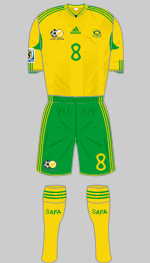

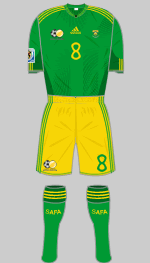
Designer: Adidas
The South African team (known as Bafana Bafana) faced a difficult task to qualify from a tough group containing three experienced World Cup teams. On paper they were the weakest of the African sides competing in the finals but they could count on passionate (and noisy) home support.
The new «sunshine and twilight green» home kit introduced for 2010 is on the face of it straightforward but closer examination reveals an intricate jacquard pattern woven into the body (representing the national flag) and neat embroidery at the collar and hem of the shorts. The second choice strip is basically a reversal of the «home» kit with the addition of «forest green» trim on the shirts and socks.
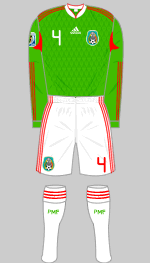
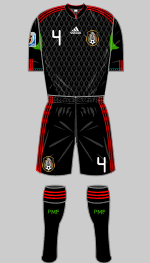

Designer: Adidas
Mexico appeared in their fifth consecutive World Cup Finals tournament, their fourteenth in all (more than any other team from the CONCACEF zone). The team initially struggled in the early qualifying games under their coach Sven Goran Erikssen but after he was replaced by former Atletico Madrid coach, Javier Aguirre, they began to play with greater consistency, finishing second in the final qualifying stage behind the USA.
El Tri played in their traditional green shirts and white shorts with red trimmings and chose black as their alternate strip.
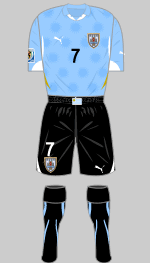
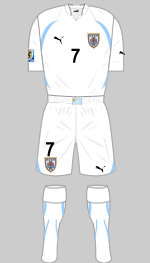
Designer: Puma
Uruguay hosted the first ever World Cup in 1930 and have won it twice, in 1930 and again in 1950. Prior to this they won gold medals in the 1924 and 1928 summer Olympics, which is why four stars appear above the team crest. More recently, La Celeste have struggled and this is only the second time they have reached the finals out of the last five competitions.
The teams traditional colours are sky blue and black. Their Puma strip featured a multi-pointed sun motif from the national flag embossed into the fabric. Early reports that the second choice shirts would be metallic gold appear to be incorrect while the early releases of the home shirt had a red Puma logo.
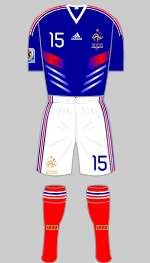
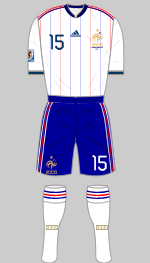
Designer: Adidas
France’s qualification was marred by the circumstances of the decisive play-off game against the Republic of Ireland, which was settled after Thierry Henry handled the ball on the goal line before passing to William Gallas who scored. The resulting outcry severely damaged the reputation of Henry and of the sport in general.
Les Blues won the World Cup in 1998 and were beaten finalists last time out. Their new strip is a reinterpret ion of the classic 1984 shirt, worn when the team won the European Championship. The classic white change shirt with fine red and blue pinstripes reappears as second choice, embellished with navy and metallic gold trim at collar and cuffs.
Group B
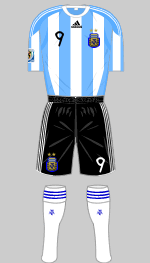
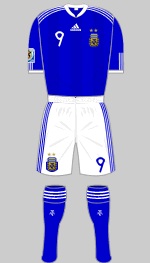
Designer: Adidas
Argentina made extremely heavy weather of qualifying, due in no small part to the eccentric selection policy of Diego Maradona, now national team coach, who picked no fewer than 56 players in 2009 alone. Nevertheless Los Albicelestes (sky blue and whites) are considered serious contenders to add a third World Cup to their tally.
The stripes on the new Adidas shirt are officially described as «Colombian Blue». The change strip is, as usual, royal blue (although no doubt Adidas’ marketing people have come up with a more fanciful description) and white and for 2010 features a shadow stripe on the shirts.
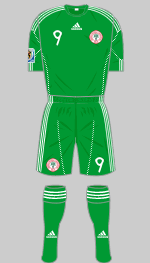
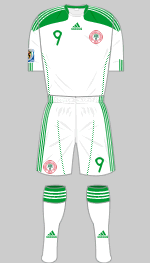
Designer: Adidas
It was rumoured at the end of 2009 that the Nigerian Football Federation had rejected Adidas’ new design. This turned out to be untrue as the twilight green strip were made available to the replica kit market at the beginning of 2010. The Eagles finished third in the 2010 African Cup of Nations and were taking part in their fourth World Cup finals campaign.
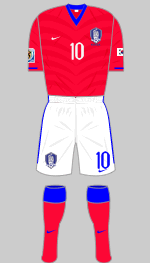
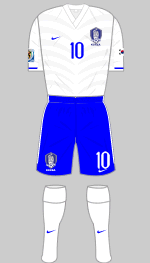
Designer: Nike
Usually known as South Korea, the team was taking part in the World Cup finals for the eighth time, more than any other Asian side. They are known as the Taeguk Warriors and generally play in pinkish red shirts with a change kit in white and blue. Both have a jacquard print woven into the shirt.
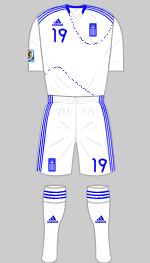
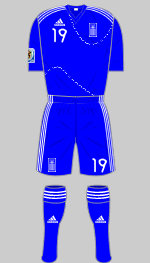
Designer: Adidas
This is only the second time that Greece have reached the World Cup Finals. Remarkably in their previous appearance, in 1994, they were also drawn in the same group as Argentina and Nigeria.
Greece have traditionally played in blue but after they became surprise winners of Euro 2004, they have worn all-white, the colours worn in the final of that competition, retaining all-blue as their second choice.
Group C
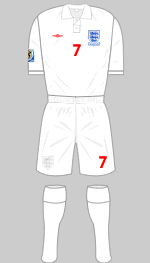
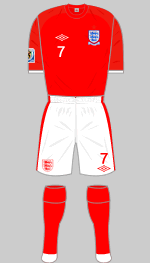
Designer: Umbro
With Fabio Capello in charge, England were a team transformed and qualified with some ease, losing just one game.
The all-white strip introduced in 2009 not only recalls the 1970 World Cup finals but also the original colours worn when the first international fixtures were played in the 1870s. The red and white away strip deliberately evokes the 1966 World Cup final.
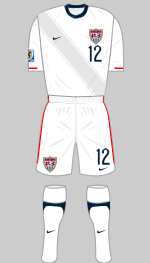
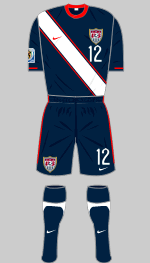
Designer: Nike
Having finished as runners-up in the 2009 Confederations Cup (the rehearsal for the World Cup played in South Africa) and qualified with some ease, the Stars and Stripes were in their sixth consecutive World Cup Finals.
The decision to wear a sash was almost certainly inspired by the strip worn in the historic 1-0 win the United States team achieved against England in the 1950 World Cup finals.
The home strip appeared at the end of April and is white with a silver sash. The main colour of the second choice kit is described as «obsidian,» a shade familiar to Arsenal supporters.
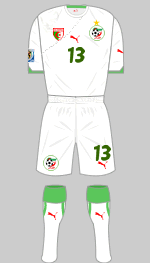
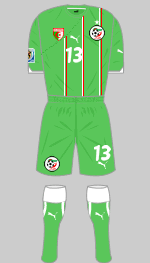
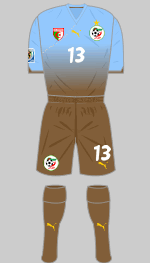
Designer: Puma
This was the third time that Algeria have qualified for the finals and marks the end of a barren 20-year spell since Algeria won the African Cup of Nations in 1990.
Algeria wear Puma’s new Africa range, launched in advance of the African Cup of Nations and worn exclusively by African teams. The all-white first choice strip has an image of a desert fox printed into the fabric below the right shoulder (the team are known as Les Fennecs).
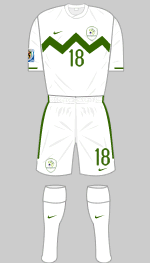
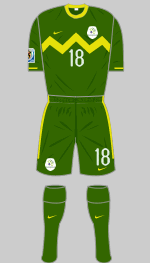
Designer: Nike
The Slovenian FA was formed in 1991 after the country broke away from Yugoslavia and their team appears in the World Cup Finals for the second time.
The team normally wear white with dark green trim. Their new strips featured a jagged band across the chest that represents Mount Triglav (Three Heads Mountain), the highest peak in the country. The lime green that features on the emblem of the FA of Slovenia and in the second choice strip represents the lipa (lime tree), a national emblem.
Group D
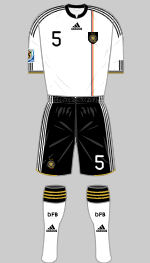
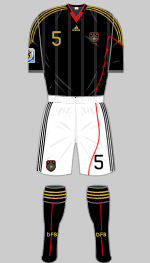
Designer: Adidas
The formidable Germans have reached the World Cup final seven times, a record shared with Brazil, and have been champions three times (FIFA considers the West German team that competed between 1950-1990 as a continuation of the united Germany team).
As usual Adidas have designed a stylish variation on the traditional white shirts and black shorts, featuring a pair of narrow vertical stripes in red and gold on the left side of the chest and metallic gold trim on the socks. The crest of the Deutscher FuГџball-Bund also appears in gold against a black background.
The black second choice shirts may strike many as an unhappy choice: they are based on the colours worn when a German select XI played an unofficial international in Paris in 1898.
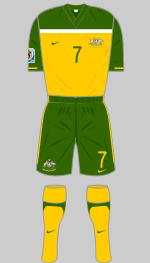
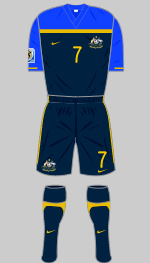
Designer: Nike
Australia switched from the Oceania Football Confederation in January 2006 to become invitee members of the ASEAN Football Federation in a bid to raise standards and provide more competitive fixtures. The Socceroos have appeared in two previous finals (1974 and 2006).
The team play in the gold and dark green associated with all Australian sport at national level. The second choice was unveiled earlier and provides a total contrast, in «obsidian,» mid-blue and gold.
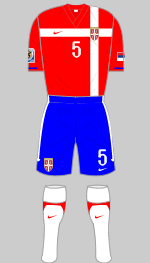
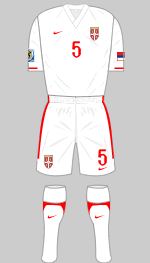
Designer: Nike
Serbia played their first international in August 2006, having previously formed part of the Serbia & Montenegro team and before that, Yugoslavia. This was, therefore, the first time a Serbian team had appeared in the World Cup finals as a separate entity.
The team play in red, blue and white, reproducing the national flag and are known as Beli Orlovi (the White Eagles). Their change strip is all-white.
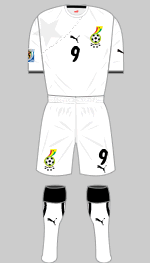
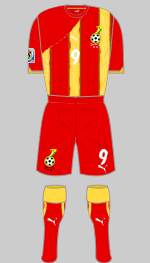
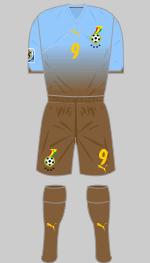
Designer: Puma
The Black Stars have appeared just once in previous World Cup finals (2006) but have won the African Cup of Nations four times, making them second only to Egypt in that competition. Indeed they met Egypt in this year’s final, losing 0-1.
The team play in all-white, now in Puma’s latest Africa range, with the black star from the national flag as a jacquard print on the right shoulder. The second choice strip is in deep red with fine gold and green stripes, printed to achieve a ragged, painted appearance.
Group E
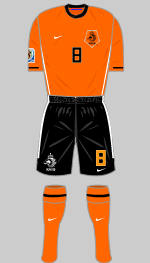
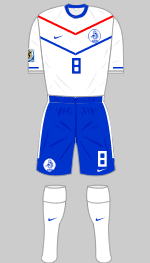
Designer: Nike
Frequently (but incorrectly) referred to as «Holland,» the Dutch team are associated with the brilliant Total Football side, led by Johan Cruyff in the 1970s when they reached two World Cup finals. Although they have remained a strong team ever since (they are ranked third in the world by FIFA at the time of writing), their only success has been a European Championship in 1988.
The new Dutch home strip was launched in April 2010. The new «away» kit features striking chevrons (repeated on the back of the socks) in the national colours.
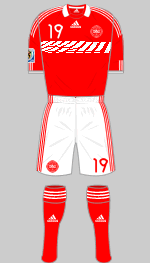
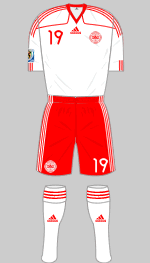
Designer: Adidas
Winners of Euro 92, the Danes have been present in only two of the four World Cup final staged since then. Their traveling fans are called roligans, known for their peaceful but passionate support (rolig = calm).
Danish teams play in the national colours of red and white, currently with an intricate white band across the chest on the first choice strip. This is absent from the second strip, which has, as usual, the colours reversed. The shorts and socks are interchangeable.
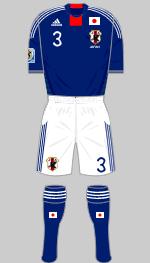
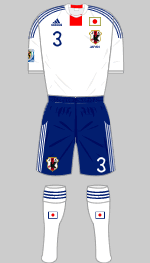
Designer: Adidas
Japan are currently one of the leading teams in Asia, having won the Asian Cup three times and qualifying four the last four World Cup finals. They have no official nickname but are sometimes referred to, rather lugubriously, as Soccer Nippon DaihyЕЌ (Japanese representatives of soccer). More recently the term Samurai Blue has come into common use.
The team’s first choice strip is in traditional deep blue with a red block at the collar. The national flag appears above the crest of the Japan Football Association. The second choice simply reverses the theme so all elements can be interchanged.
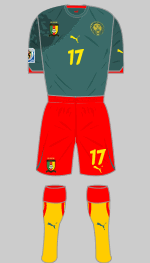
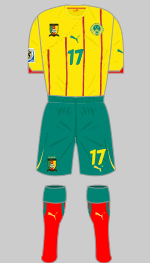
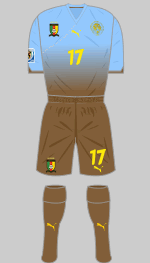
Designer: Puma
The exploits of the Cameroon team in the 1982 and 1990 World Cup finals served notice that African teams could challenge the leading sides from South America and Europe, paving the way for an increase from two to three African qualifiers. Les Lions Indomptables (The Indomitable Lions) have appeared regularly in the finals ever since (although they missed out on the 2006 tournament) and have won the African Cup of Nations four times.
Cameroon have in the past fallen foul of FIFA with sleeveless and one-piece playing kits but their new Puma African strips avoid further controversy. The lion motif appears as an additional crest and as a jacquard print on the green first choice shirts while interesting paint-effect» stripes decorate the yellow second-choice top. The team habitually switch their shorts and socks to avoid clashes with opponents.
Group F
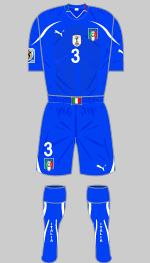
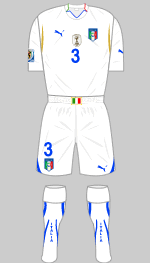
Designer: Puma
Italy are holders of the FIFA World Cup and have won the competition four times, making them second only to Brazil in the history of the competition. They team are known as Azzuri after the colour of their shirts, which are taken from the colours of the Royal House of Savoy under whom Italy was unified in 1861.
The Italians can usually be relied upon to wear stylish outfits and the sets unveiled for 2010 are no exception. The first choice strip is in traditional azzuri blue, a shade lighter than usual and features a dramatic jacquard print on the front and back of the shirt. Although traditionally Italy wear white shorts, they have opted for blue this year, which is what they wore when they won in 2006.
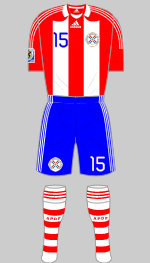
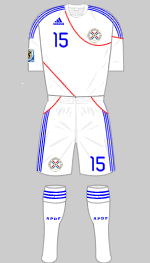
Designer: Adidas
This is the eighth time that Paraguay have reached the final stage of the World Cup. They appear to have made considerable progress in recent years, becoming the second team to qualify from the CONMEBOL zone, ahead of Argentina, Colombia and Chile.
Paraguay’s traditional colours are red and white striped shirts and blue shorts, taken directly from the national flag.
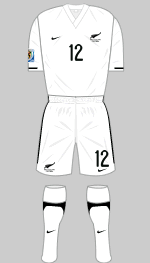
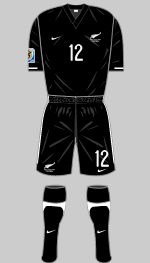
Designer: Nike
Despite having many amateur players, association football struggles for attention and resources against the two rugby codes in New Zealand. A semi-professional football league only started in 2004 and the country’s single fully professional team plays in the Australian A League. Qualifying for the World Cup finals for the second time in their history is therefore something of an achievement.
The team are known as the «All-Whites» to distinguish them from the illustrious national rugby union team and because that’s what they play in. When a change is required the Kiwis turn out in black.
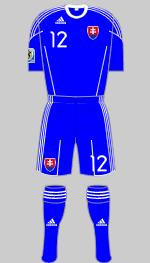
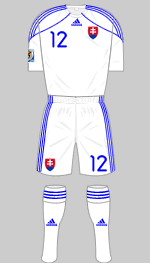
Designer: Adidas
The Slovakian team played its first international in February 1994 after the break up of the former Czechoslovakia. They appear in the World Cup finals for the first time in their history although the Czechoslovak team played in eight tournaments and reached the final twice. The team wear the national emblem rather than the badge of the Slovak Football Association.
Group G
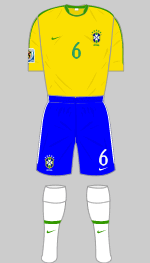
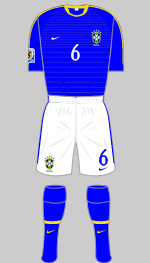
Designer: Nike
Brazil are, quite simply the most successful team in the history of the World Cup. Champions five times, they have appeared in every finals tournament. Although the team’s green trimmed gold shirts, blue shorts and white socks have become iconic, they did not appear until March 1954 after the newspaper, Correio da ManhГЈ, ran a competition to design a more patriotic strip to replace the all-blue outfit worn at the time.
Nike have made only changes in the detailing of both first and second choice strips for 2010. The blue second strip has a pattern of fine dots over the body.
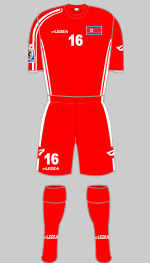
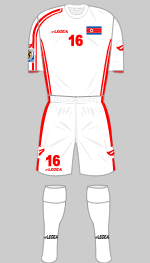
Designer: Legea
No-one old enough to remember the 1966 World Cup finals will ever forget the exploits of the diminutive North Korean team who beat Italy 1-0 to qualify for the quarter-finals where they went 3-0 up against Portugal before conceding five to lose the match.
Although North and South Korea are still technically at war, the teams met in the qualifying competition. The first match was moved to Shanghai after the North Korean government refused to allow the South Korean flag to be flown or the anthem to be played in Pyongyang. After the DPRK team lost the return leg in Seoul their coach accused their opponents of poisoning his team.
The team plays in all-red but the commercial exploitation of replica kits is not a priority in the workers’ paradise and in the few warm up matches they have played in strips by various manufacturers. Against Venezuela they had to borrow a set from the home team after their own were lost in transit. However, HFK has learned that their strips for the finals are supplied by Italian company, Legea.
From Wikipedia, the free encyclopedia
Tell your friends about Wikiwand!
Gmail Facebook Twitter Link
Suggest as cover photo
Would you like to suggest this photo as the cover photo for this article?
Thank you for helping!
Your input will affect cover photo selection, along with input from other users.
Thanks for reporting this video!
This browser is not supported by Wikiwand 🙁
Wikiwand requires a browser with modern capabilities in order to provide you with the best reading experience.
Please download and use one of the following browsers:
An extension you use may be preventing Wikiwand articles from loading properly.
If you’re using HTTPS Everywhere or you’re unable to access any article on Wikiwand, please consider switching to HTTPS (https://www.wikiwand.com).
An extension you use may be preventing Wikiwand articles from loading properly.
If you are using an Ad-Blocker, it might have mistakenly blocked our content. You will need to temporarily disable your Ad-blocker to view this page.
2010 FIFA World Cup South Africa
We’ll begin emailing you updates about %gameName%.
Latest on 2010 FIFA World Cup South Africa

FIFA World Cup 2010 Official Trailer 2
Check out the trailer for FIFA World Cup 2010 on the iPhone.
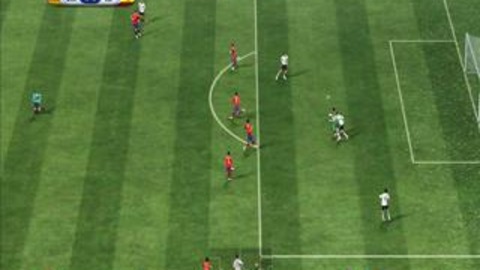
GameSpot World Cup: Germany vs. Spain—Full Match
We simulated the Germany vs. Spain World Cup semifinal match on July 7 to predict the outcome. Check out the full match!

GameSpot World Cup: Argentina vs. Mexico—Match Highlights
We simulated the Argentina vs. Mexico World Cup match on June 27 to predict the outcome. Check out the match highlights!

Chinese New Year promos land on PSN
To herald the Year of the Rabbit, Asian PSN users will get to enjoy titles Castle Crashers and Peace Walker for half the price.
Publisher beats projections, says digital offerings are «driving the business,» account for nearly 22 percent of revenues in first quarter.
We simulated the Netherlands vs. Spain World Cup finals match to predict the outcome. Check out the match highlights!

GameSpot World Cup: Uruguay vs. Netherlands—Match Highlights
We simulated the Uruguay vs. Netherlands World Cup semifinal match on July 6 to predict the outcome. Check out the match highlights!

GameSpot World Cup: Germany vs. Spain—Match Highlights
We simulated the Germany vs. Spain World Cup semifinal match on July 7 to predict the outcome. Check out the match highlights!

We simulated the Paraguay vs. Spain World Cup match on July 3 to predict the outcome. Check out the full match!
GameSpot World Cup: Paraguay Vs. Spain—Match Highlights
We simulated the Paraguay vs. Spain World Cup match on July 3 to predict the outcome. Check out the match highlights!

GameSpot World Cup: Argentina vs. Germany—Full Match
We simulated the Argentina vs. Germany World Cup match on July 3 to predict the outcome. Check out the full match!

GameSpot World Cup: Argentina vs. Germany—Match Highlights
We simulated the Argentina vs. Germany World Cup match on July 3 to predict the outcome. Check out the match highlights!
GameSpot World Cup: Brazil vs. Holland—Match Highlights
We simulated the Brazil vs. Holland World Cup match on July 2 to predict the outcome. Check out the match highlights!

GameSpot World Cup: Brazil vs. Holland—Full Match
We simulated the Brazil vs. Holland World Cup match on July 2 to predict the outcome. Check out the full match!

GameSpot World Cup: Uruguay vs. Ghana—Match Highlights
We simulated the Uruguay vs. Ghana World Cup match on July 2 to predict the outcome. Check out the match highlights!
GameSpot World Cup: Uruguay vs. Ghana—Full Match
We simulated the Uruguay vs. Ghana World Cup match to try to predict the outcome. Check out the full match!
EA Sports FIFA World Cup Official Mobile Trailer 1
Get in on some FIFA World Cup action on your mobile phone!
Jun 29, 2010 11:42am
GameSpot’s World Cup Feature
GameSpot’s World Cup feature.
2010 FIFA World Cup South Africa
FIFA World Cup returns with World Cup South Africa featuring all 199 national teams and 10 official licensed stadiums.
From Wikipedia, the free encyclopedia
Tell your friends about Wikiwand!
Gmail Facebook Twitter Link
Suggest as cover photo
Would you like to suggest this photo as the cover photo for this article?
Thank you for helping!
Your input will affect cover photo selection, along with input from other users.
Thanks for reporting this video!
This browser is not supported by Wikiwand 🙁
Wikiwand requires a browser with modern capabilities in order to provide you with the best reading experience.
Please download and use one of the following browsers:
An extension you use may be preventing Wikiwand articles from loading properly.
If you’re using HTTPS Everywhere or you’re unable to access any article on Wikiwand, please consider switching to HTTPS (https://www.wikiwand.com).
An extension you use may be preventing Wikiwand articles from loading properly.
If you are using an Ad-Blocker, it might have mistakenly blocked our content. You will need to temporarily disable your Ad-blocker to view this page.
From Wikipedia, the free encyclopedia
Tell your friends about Wikiwand!
Gmail Facebook Twitter Link
Suggest as cover photo
Would you like to suggest this photo as the cover photo for this article?
Thank you for helping!
Your input will affect cover photo selection, along with input from other users.
Thanks for reporting this video!
This browser is not supported by Wikiwand 🙁
Wikiwand requires a browser with modern capabilities in order to provide you with the best reading experience.
Please download and use one of the following browsers:
An extension you use may be preventing Wikiwand articles from loading properly.
If you’re using HTTPS Everywhere or you’re unable to access any article on Wikiwand, please consider switching to HTTPS (https://www.wikiwand.com).
An extension you use may be preventing Wikiwand articles from loading properly.
If you are using an Ad-Blocker, it might have mistakenly blocked our content. You will need to temporarily disable your Ad-blocker to view this page.
 Denmark
 Switzerland
 Japan
Japan Honduras
 Cameroon
 Chile
Chile Slovakia
 Portugal
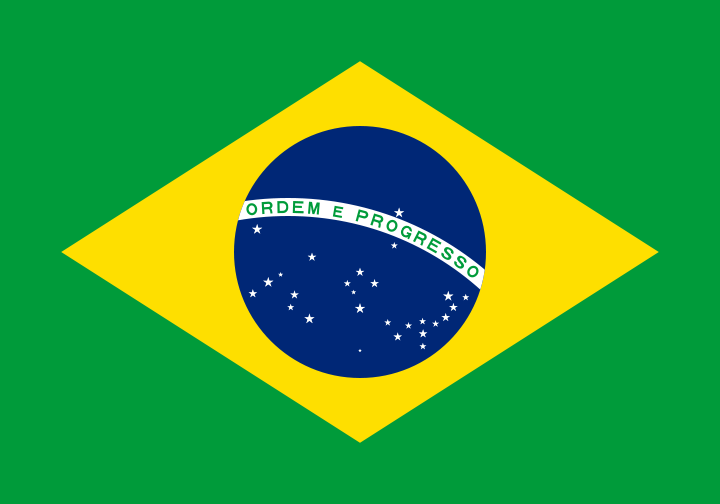 Brazil
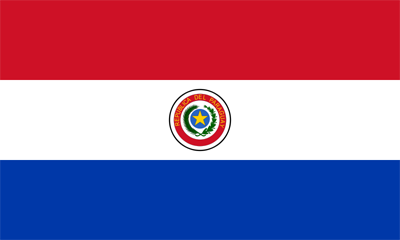 Paraguay
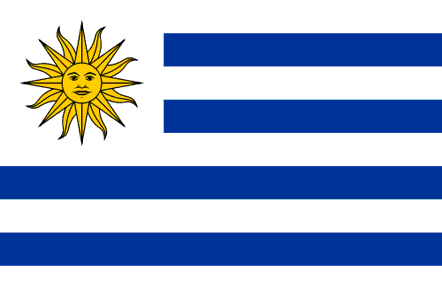 Uruguay
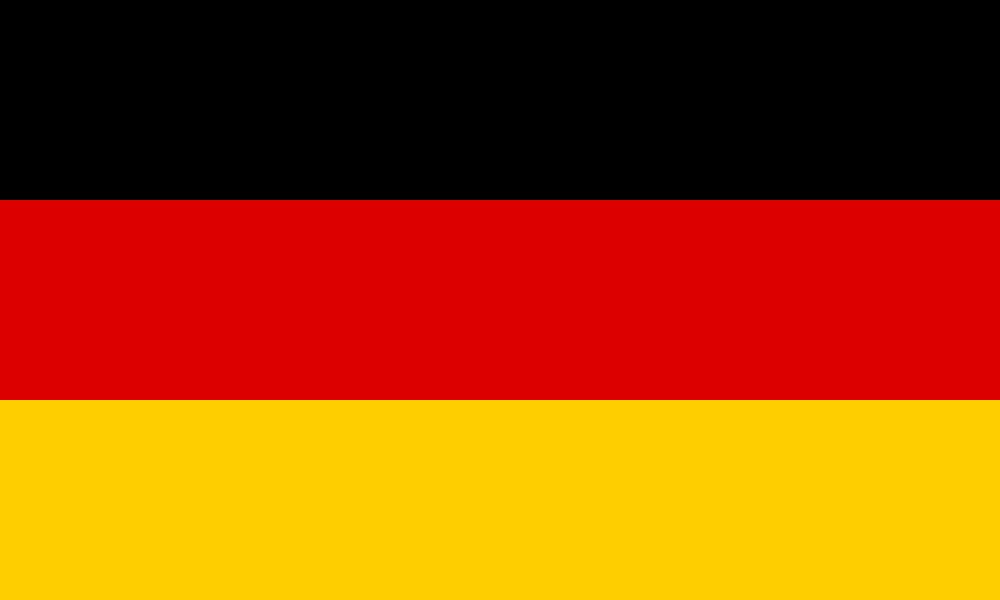 Germany
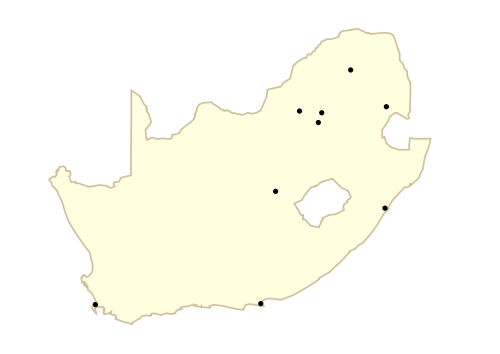

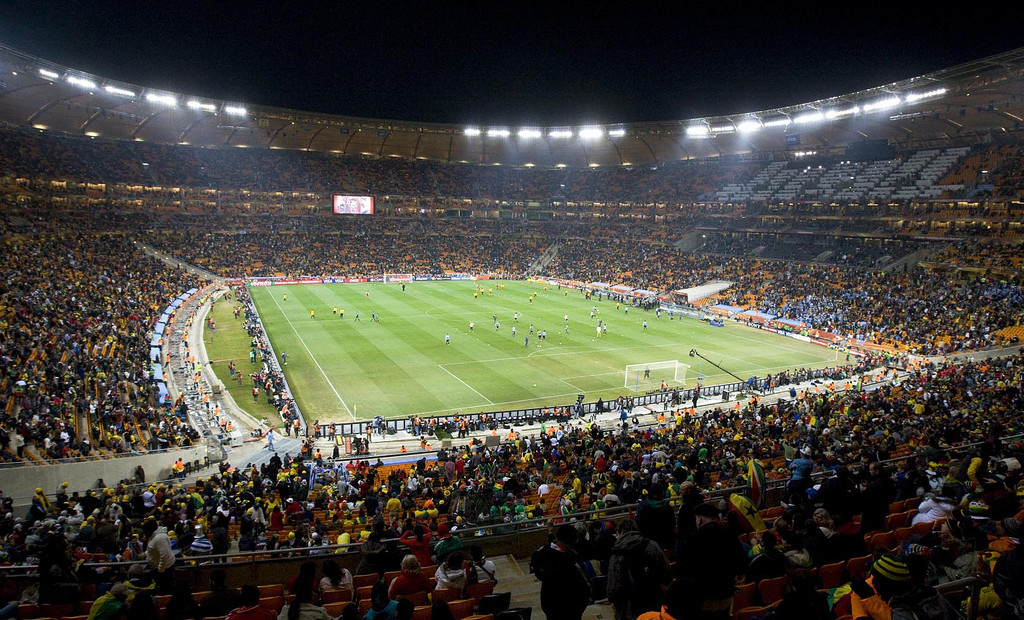
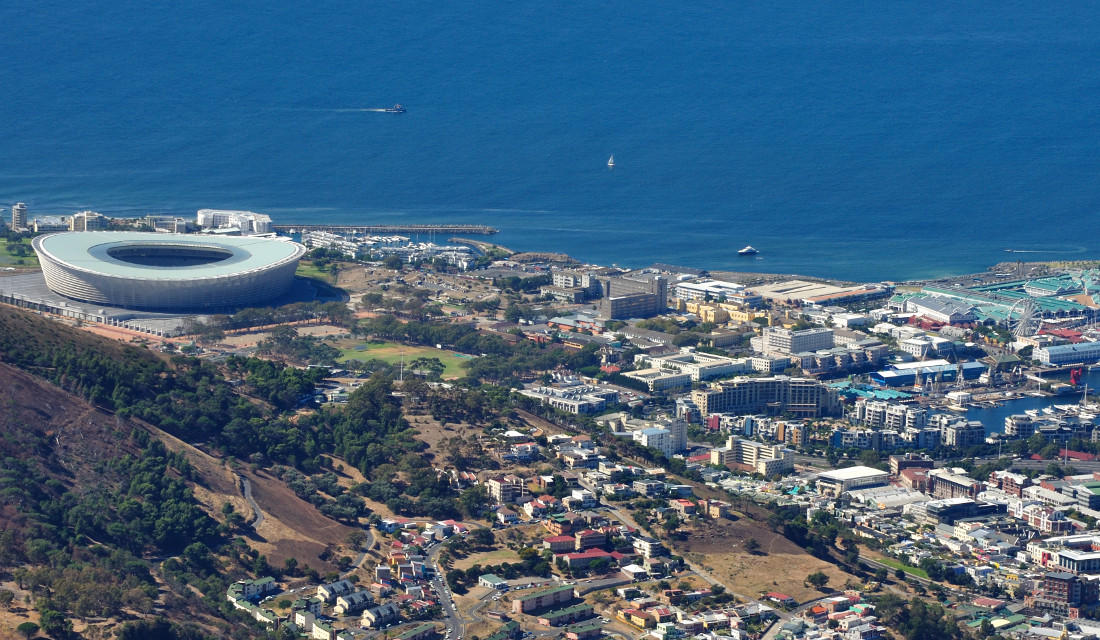
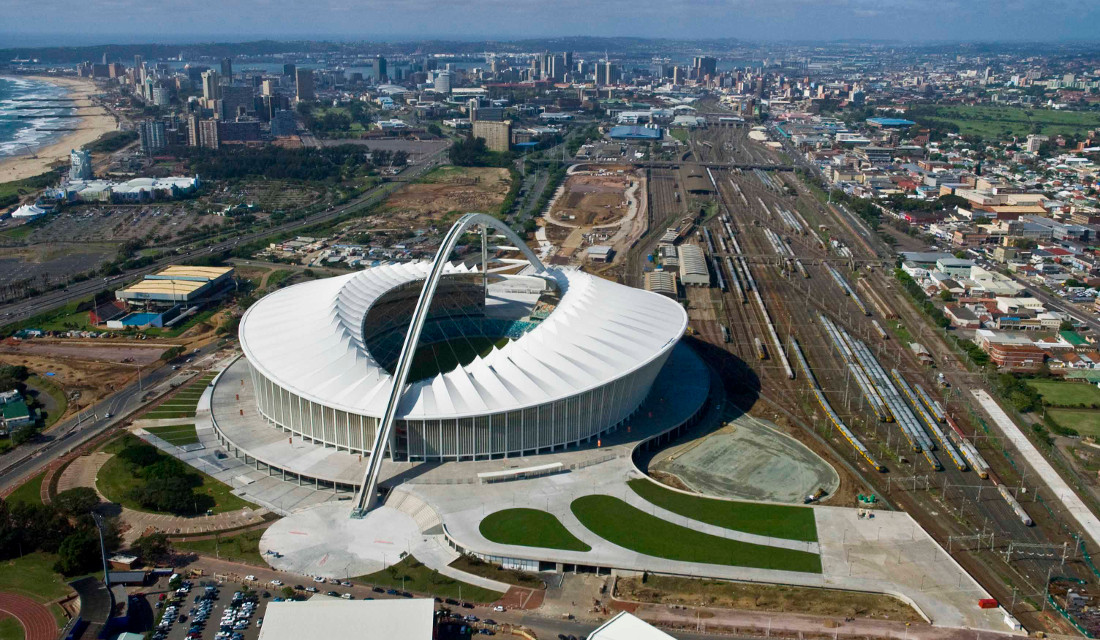
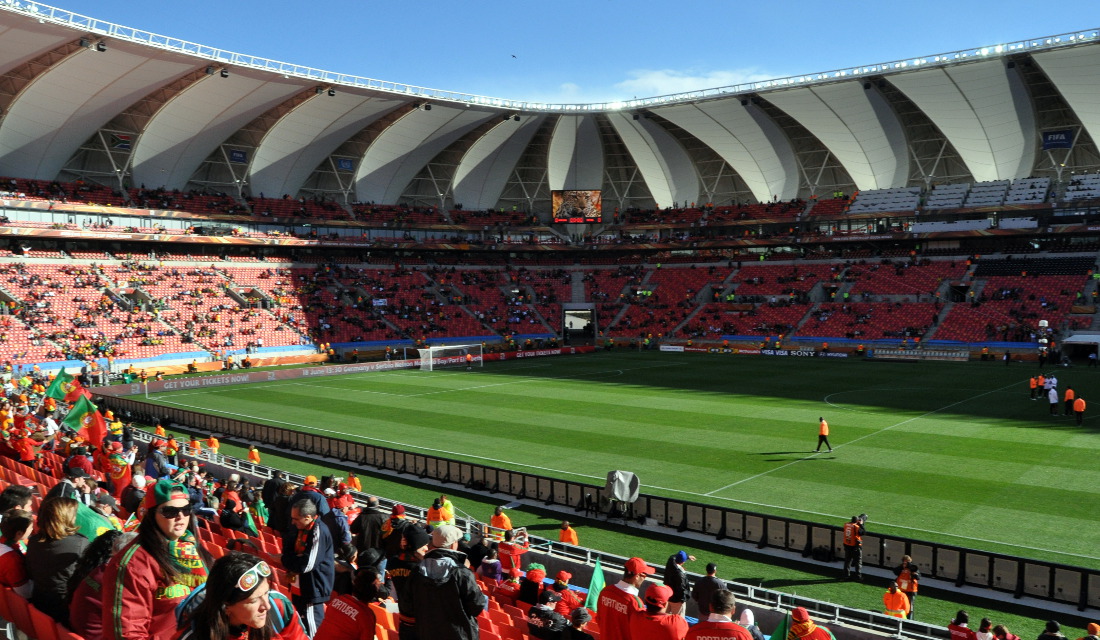

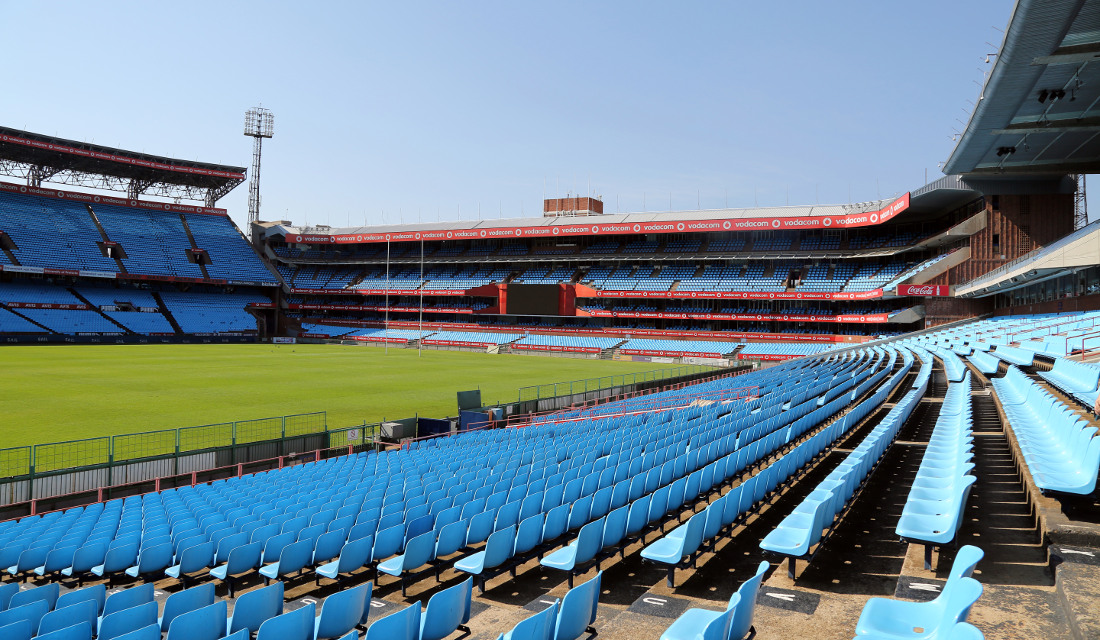
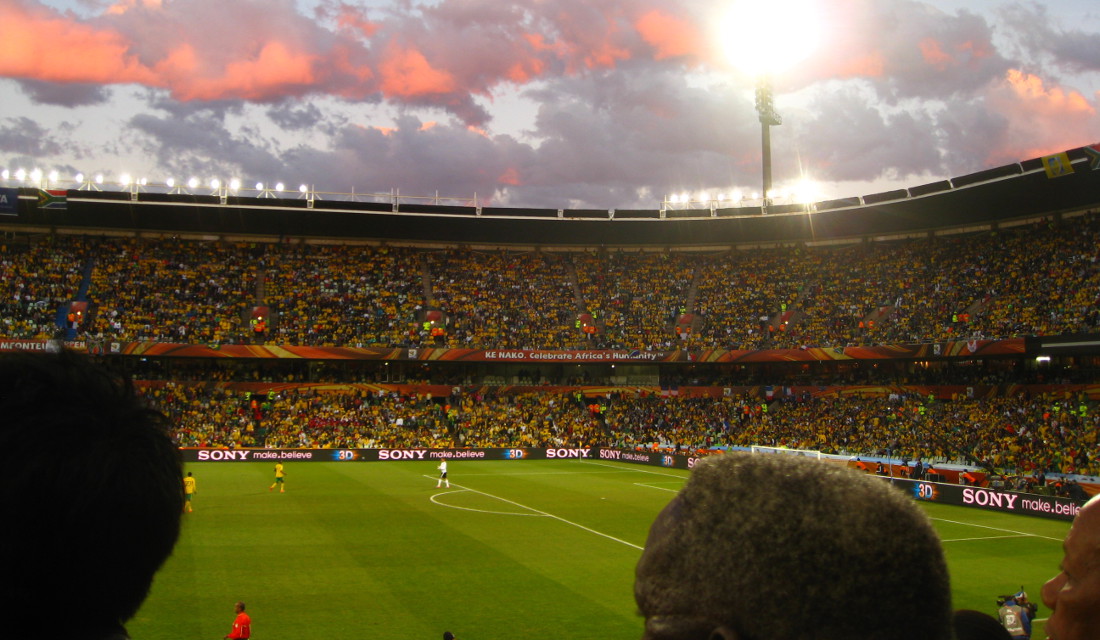
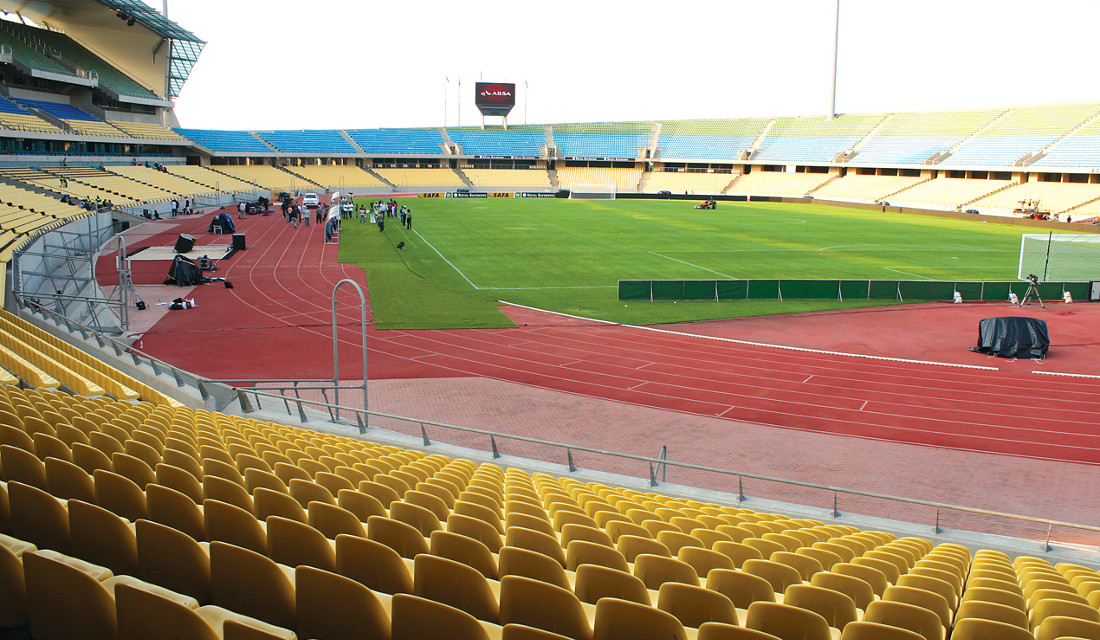
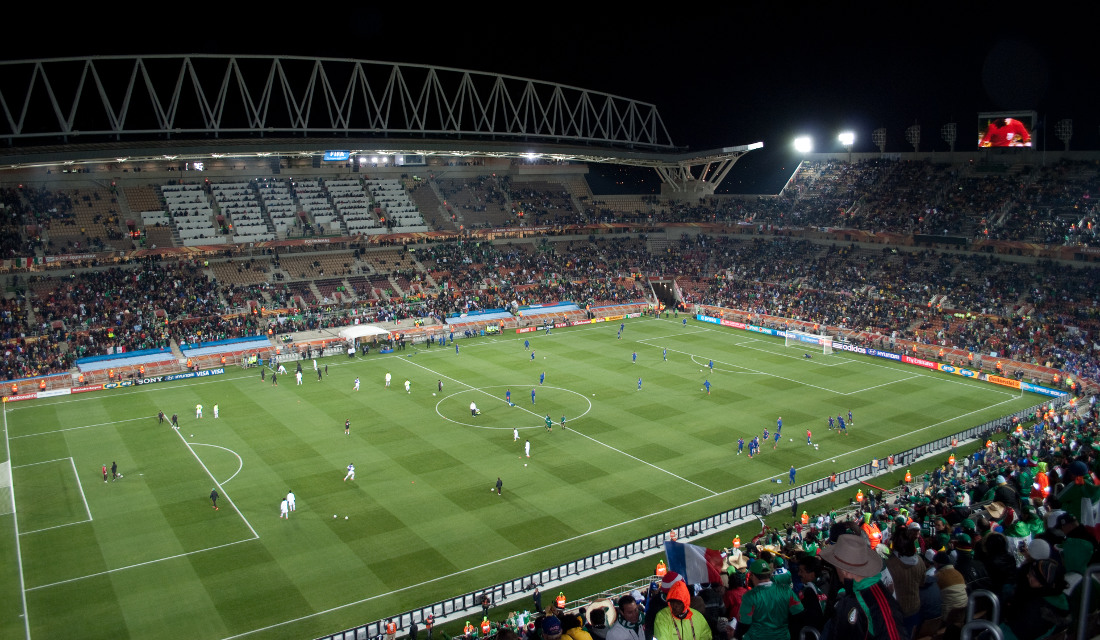
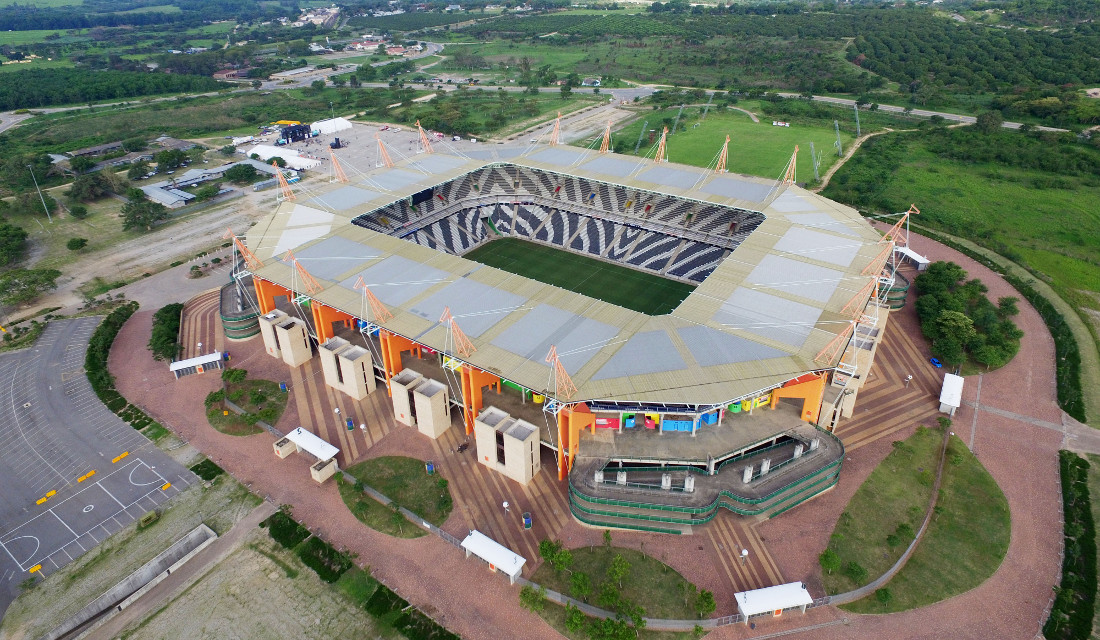
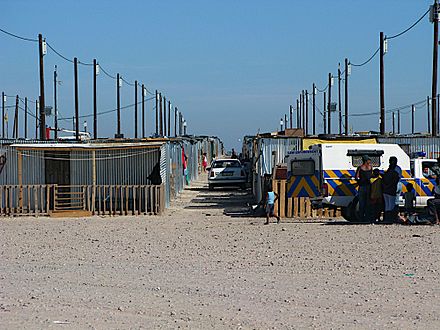


 The location-based service has a number of special things going on to commemorate the World Cub. First, if you check-in anywhere and include “World Cup” in your comment, you’ll get a special “Beautiful Game” pin. Second, if you happen to be in South Africa for the game, the opening match (and closing match) venue has a special stamp. There are also special stamps for some of the big matches like South Africa vs. Mexico and USA vs. England.
 The International Federation of Association Football, commonly known as FIFA, should be prepared for the wave. Its main website evidently is all about the World Cup today and in the coming weeks, and it’ll be the main source of information for many, many people scouring for information on the Web. It also helps that most of the major search engines are including links to the site in their custom search results.
 IMHO, the Goal.com application is top of the bill. Apps are available for Nokia (S60 5th edition), iPhone, BlackBerry, Android and Windows Mobile smartphones – get them by visiting http://m.goal.com/app directly from a mobile browser. Or just use your mobile browser to head to m.goal.com.